Event 1
The Underground Man’s Shoulder Clash Revenge on the Officer on Nevsky Prospect

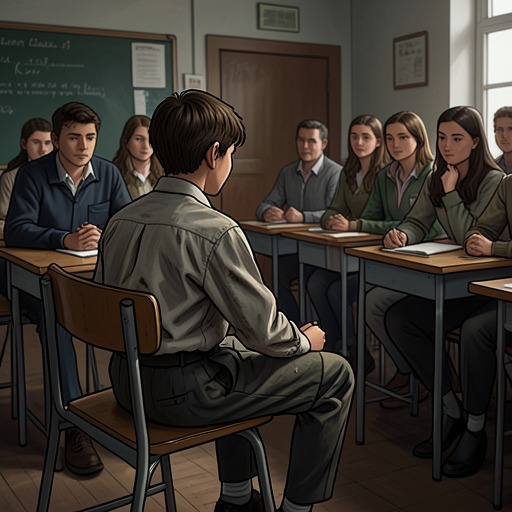
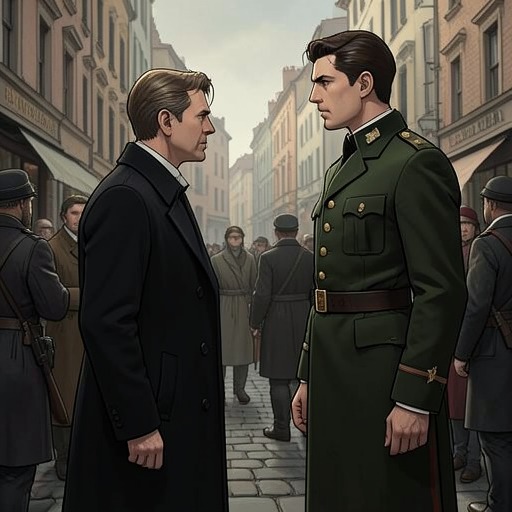
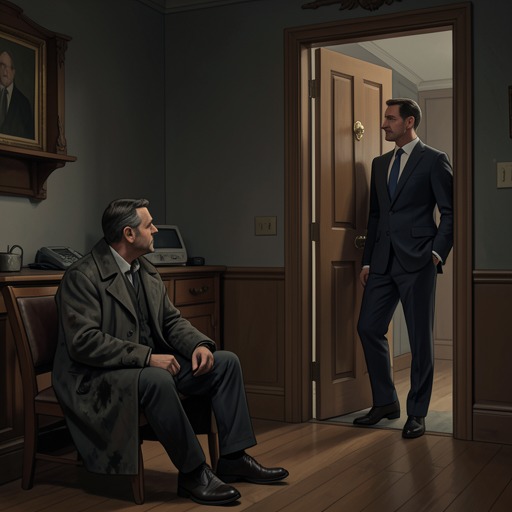
The [Underground Man](entity:character-recall-character-underground-man-62aab1afc7fd)’s Shoulder Clash Revenge on Nevsky Prospect turns a silent shove into a private drama of humiliation, rehearsal, and revenge. Years after an officer takes him by the shoulders and moves him out of the way, the Underground Man deliberately meets him on the Nevsky, closes his eyes, and collides with him without giving ground. The officer does not look back, but the Underground Man declares the encounter a victory: he has, in his own account, asserted an equal social footing and returned home triumphant.## The original slight and its lasting holdThe conflict begins beside a billiard table. The Underground Man is standing in the officer’s way, unaware that he is obstructing the passage; the officer wants to get by and takes him by the shoulders, moving him aside without a word. That brief physical correction establishes the imbalance that governs the later episode: the officer acts as though the Underground Man can simply be displaced, while the Underground Man experiences the gesture as an insult to his standing.## Resentment becomes a planThe Underground Man later encounters the officer in the street and watches him closely, though he is unsure whether the officer recognizes him. He stares at him with spite and hatred, and the resentment lasts for years. The officer’s conduct on the Nevsky intensifies the fixation: he turns aside for generals and people of high rank but walks straight through the paths of people like the Underground Man, as though they were not there. The Underground Man repeatedly goes to the avenue, drawn by the chance to see and admire the man who embodies the original slight.## The collision on the NevskyEventually, the Underground Man goes to the Nevsky intending to abandon his plan and see whether he can give it up. Three paces from the officer, however, he makes the opposite choice: he closes his eyes and runs into him shoulder to shoulder. He does not budge an inch and passes on what he regards as equal terms. The officer is stronger, and the Underground Man concedes that he gets the worst of the physical impact; physical advantage is not the measure by which he judges the result.## Victory without acknowledgmentThe officer does not turn around and pretends not to notice the collision. The Underground Man is convinced that this indifference is only a pretense, but the account supplies no independent confirmation that the officer understands the encounter as revenge. The decisive change takes place in the Underground Man’s own interpretation: by refusing to yield, he believes he has publicly placed himself on an equal social footing with the man who once moved him aside. He returns home feeling fully avenged, delighted and triumphant, and sings Italian arias.## The episode’s afterlifeThe narrator declines to describe what happened to him three days later, saying that a reader of the opening chapter can guess. The celebration therefore does not stand as a stable, lasting resolution; its immediate aftermath is withheld and linked to the narrator’s earlier account. The officer is later transferred, and the Underground Man has not seen him for fourteen years. His closing questions about what the officer is doing and whom he is walking over keep the grievance alive even after any chance of another encounter has passed. The episode’s revenge is real as a change in the Underground Man’s sense of dignity, but it remains private and uncertain as a victory over the officer: the man he resents never acknowledges it, and the meaning of the clash rests almost entirely on the narrator’s insistence.
Event 2
Zverkov’s Farewell Dinner
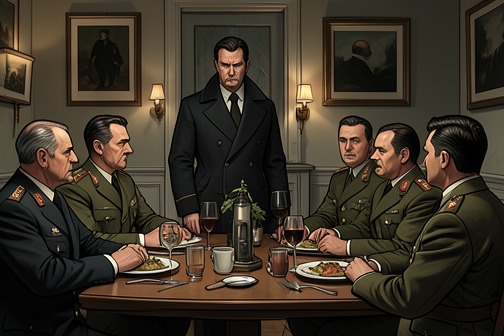
[Zverkov’s Farewell Dinner](entity:event-recall-event-abacab91a62f) is a gathering meant to send a former schoolmate off to a distant province, but it becomes a public enactment of the [Underground Man](entity:character-recall-character-underground-man-62aab1afc7fd)’s estrangement from the people whose acceptance he wants. Having inserted himself into the invitation, he treats the dinner’s expenses, forms of address, and small gestures of courtesy as tests of his standing. The evening ends not in reconciliation but with the company leaving together and the Underground Man resolving to pursue them, caught between a wish for friendship and a desire to retaliate.
## Background and Invitation
The dinner is planned for [Zverkov](entity:character-recall-character-3de1f75f7704), an army officer who is leaving for a distant province. The Underground Man arrives while the former schoolmates are discussing their arrangements. Zverkov had been at school with him, and the Underground Man says he had hated him from the lower forms, when Zverkov was a popular, playful boy. In later school years Zverkov’s academic performance deteriorated, but he left with a good certificate and inherited an estate of two hundred serfs. The contrast between Zverkov’s advantages and the Underground Man’s abiding resentment is already present before the dinner begins.
The men settle on a dinner for four at the [Hotel de Paris](entity:location-recall-location-hotel-de-paris-4f8f220569bc) at five o’clock the next day, budgeting twenty-one roubles. The Underground Man objects that including him makes the total twenty-eight roubles, a correction that turns his uninvited status into a question of payment and recognition. [Simonov](entity:character-recall-character-6c7ef2447f0d) eventually puts his name down. The invitation is thus accepted, but its terms do not resolve the more basic uncertainty: whether he is wanted as a companion or merely accommodated as an additional expense.
## Courtesy and Status at the Table
When Zverkov and the others arrive, they are laughing together. Zverkov approaches the Underground Man deliberately and gives him a friendly but restrained handshake, with the careful courtesy of someone maintaining distance. The Underground Man has anticipated the entrance as an opportunity to assert himself; the measured greeting instead leaves him feeling slighted. At the Hotel de Paris, manners become evidence that he scrutinizes for signs of rank and exclusion.
That scrutiny has been prepared by his broader difficulty with ordinary forms of honor. In another episode he imagines protesting an insult in literary language, but fears that the people around him would jeer and fail to understand him. The dinner gives that mismatch a social setting: the Underground Man seeks recognition through ceremonious language, while his companions do not share his investment in the same performance. His insistence that the bill should account for his presence is one early sign that he is trying to claim a place in the party by making its conventions answer to him.
## Insult, Challenge, and Apology
The tension sharpens into open quarrel. Zverkov finally cuts off the disturbance, and the Underground Man addresses him with a prepared denunciation of phrases, phrase-makers, and men in corsets. Rather than repairing his standing, this speech makes him the focus of the company’s disapproval. He then turns to Ferfitchkin and demands satisfaction for Ferfitchkin’s words, presenting the challenge as a dignified response even as the exchange makes him appear increasingly ridiculous to the others.
For all the aggression of his posture, his underlying wish is to be reconciled with the group. He waits for the others to speak to him, but they do not. As the evening advances, they move from the table to the sofa; Zverkov stretches out, and the group carries on without addressing him. The Underground Man tries to attract notice by speaking loudly, but the attempt does not hold their attention. His efforts at self-assertion produce the very isolation they were meant to overcome.
At eleven, Zverkov announces that the friends should leave. The Underground Man abruptly asks his forgiveness, along with Ferfitchkin’s and everyone else’s, admitting that he has insulted them all. Ferfitchkin answers with a taunt about the earlier challenge, and the others laugh as they refuse to treat the apology as a successful restoration of his standing. The party departs noisily; the Underground Man is left behind with Simonov for a moment, then with the consequences of the scene.
## Aftermath and Narrative Significance
The conclusion converts humiliation into a new plan for action. The Underground Man declares that he will go after the others, imagining two possible outcomes: they will beg for his friendship, or he will slap Zverkov. Neither possibility is a continuation of the apology he has just made. The fantasy of reconciliation and the threat of retaliation remain side by side, exposing how readily his longing for admission turns back into a struggle for dominance.
The episode also dramatizes the gap between the narrator’s elaborate sense of honor and his practical inability to secure the recognition he demands. A handshake, a place on the guest list, a share of the bill, a challenge, and an apology each become attempts to manage rank; none gives him command of how the others see him. As a scene in his retrospective account, the dinner gathers his characteristic contradiction into a single social encounter: he wants to belong, makes belonging a contest, and leaves the gathering with his grievance renewed rather than resolved.
Event 3
Hotel de Paris farewell dinner
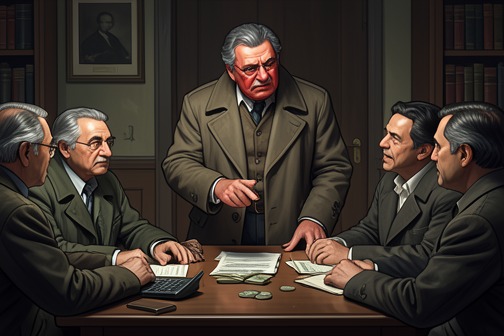
The [Hotel de Paris farewell dinner](entity:event-recall-event-hotel-de-paris-farewell-ffa9d821bf2a) is the social encounter that leaves the [Underground Man](entity:character-recall-character-underground-man-62aab1afc7fd) humiliated by his former schoolfellows and sets his subsequent treatment of Liza in motion. He had maneuvered his way into a gathering held for [Zverkov](entity:character-recall-character-3de1f75f7704), then found himself unable to secure the recognition and authority he had imagined. In retrospect, he admits that the insult he meant to avenge on one of the men was instead taken out on Liza: the dinner’s decisive consequence is not reconciliation or restored standing, but the transfer of humiliation to someone more vulnerable.
## Invitation and the Cost of Admission
The dinner begins as a farewell for Zverkov, a former schoolfellow whom the Underground Man describes in his account to a moneylender as a childhood friend. [Simonov](entity:character-recall-character-6c7ef2447f0d) arranges the gathering at the [Hotel de Paris](entity:location-recall-location-hotel-de-paris-4f8f220569bc) for five o’clock. When Simonov calculates a total of twenty-one roubles for the three others and Zverkov, the Underground Man insists that his inclusion makes the sum twenty-eight. The correction is more than arithmetic: he has invited himself into a circle whose members have not spontaneously claimed him, and he makes his place visible by insisting that the cost of it be counted.
Simonov finally puts his name down for the dinner, while Ferfitchkin raises the question of money in an undertone. The episode makes social inclusion inseparable from payment and from the awkwardness of being admitted late. The Underground Man’s agitation at the total suggests how sharply he registers the transaction, even as he presses for the recognition that attendance might confer. His later conduct will show the gap between being included in the arrangements and being accepted as an equal participant.
In advance, he imagines that a public quarrel could become a matter of honor. He fears not physical violence but the laughter and incomprehension of everyone present if he begins to protest in the elevated, literary language he associates with a point of honor. That fear exposes the dinner’s social stakes before it begins: he wants to enact a serious challenge, yet anticipates an audience that will read the performance as ridiculous. His idea of honor depends on the very spectators whose judgment he distrusts.
## Preparation and the Encounter
The prospect of appearing before the group turns the dinner into a performance he tries to rehearse through clothing and appearance. He reasons that, if a public scandal occurs, he must be dressed decently; the company, in his imagination, includes the Countess, Prince D., and the literary world. His imagined audience magnifies the consequences of a shoulder or word into a public test of standing. But the practical preparations also reveal how little command he feels he has over the scene: he can plan his costume and script, not how others will receive him.
The preparations expose material signs that his imagined role cannot conceal. He steals brushes from the passage to clean his clothes, taking care that his servant does not detect him for fear of contempt. On inspection, the clothes seem old, worn, and threadbare; his uniform may be tidy, but he cannot wear it to the dinner, and a large yellow stain marks the knee of his trousers. The stain and borrowed brushes give the anticipated encounter a concrete vulnerability: the man planning a conspicuous assertion of honor is already preoccupied with the shabby appearance that might undermine it.
When the others arrive, the Underground Man is briefly overjoyed to see them, as if they were deliverers, and momentarily forgets that he is supposed to show resentment. Zverkov leads the group. He approaches with deliberate, jaunty courtesy and shakes the Underground Man’s hand in a friendly but guarded fashion, like a general warding something off. The greeting is not outright rejection, but its measured distance frustrates the intimacy and recognition the Underground Man has imagined. He is present among his former schoolfellows, yet their manner leaves him feeling that his presence has not made him one of them.
The encounter ends, in the Underground Man’s own assessment, with him sitting crushed and humiliated while nobody pays him any attention. His sense of injury is therefore not simply a response to a single insult: it grows out of the difference between the dramatic significance he assigns to his conduct and the group’s apparent failure to treat him as significant. That mismatch leaves him fixated both on his own humiliation and on the need to make someone answer for it.
## Apology and the Manufacture of a Respectable Version
After the gathering, the Underground Man makes a written attempt to repair the damage. He borrows fifteen roubles from a moneylender and tells him that the previous night he had kept it up with friends at the Hotel de Paris for a farewell party for a childhood comrade. The grandly casual account makes the dinner sound like proof of a social life and friendship, rather than the humiliating failure he privately recalls. The money is also tied to his urgent desire to restore his reputation in Zverkov’s and Simonov’s eyes, which he identifies as his chief business that morning.
His letter to Simonov presents a second version, now carefully composed as an apology. The Underground Man recalls its gentlemanly, good-humoured, candid tone: he blames himself, explains that he was unaccustomed to wine and became intoxicated after the first glass, and asks Simonov to convey his apologies to the others, especially Zverkov. He claims to remember the insults as though in a dream and says that his headache and shame prevented him from calling in person. Politeness lets him manage the face-threatening aftermath at a distance, with Simonov as intermediary; it does not establish that his former schoolfellows accept the explanation or restore the standing he wants.
That effort at respectable self-presentation does not resolve what happened. In his later recollection, he says that he had been insulted at dinner by the men who arrived before him and had gone to find an officer in order to thrash him, but failed to find him. The recollection shifts attention from the apology’s account of drunkenness to an unfulfilled project of retaliation. The dinner thus persists in two incompatible registers: as an episode to be explained away with tact and an injury that, in the Underground Man’s telling, still demands repayment.
## Displaced Revenge and the Event’s Afterlife
The dinner’s most consequential afterlife appears when the Underground Man tells Liza why he treated her cruelly. He admits that he had been humiliated by the men at dinner and had wanted to avenge the insult on one of them, the officer he failed to find. He says that he needed to avenge the insult on someone to get his own back, and that Liza happened to be there: he vented his spleen on her, laughing and seeking to humiliate her because he had himself been humiliated. The confession identifies the causal link plainly. His conduct toward Liza was not the rescue she may have imagined; it was revenge redirected from the people who had injured his pride to someone on whom he could exercise power.
This reversal gives the dinner a reach beyond its immediate participants. The Underground Man’s earlier fear that the company would laugh at a declaration of honor becomes, in his account of Liza, the source of a harsher response: having failed to command respect among his former schoolfellows, he tries to command another person through humiliation. He describes his own position as that of someone treated like a rag, then acknowledges his desire to show power in turn. What he could not force from the dinner’s audience, he sought from Liza by making her the audience and target of his contempt.
His disclosure also unsettles the persona he had performed for Liza. He says he had posed as a hero and worried for three days that she would see him in a torn dressing-gown, beggarly and loathsome; he admits that he is ashamed of his poverty and more afraid of it than of being exposed as a thief. In this account, the farewell dinner belongs to a broader struggle over appearances: at the Hotel de Paris he feared that his shabby clothes would spoil his assumed public dignity, while with Liza he fears that his domestic poverty will expose the heroic image he had constructed. The dinner’s humiliation does not merely precede his cruelty; it becomes part of the explanation with which he strips that performance away.
As an event, the dinner is less important for any lasting change in the group’s relations than for the sequence of failed repairs and redirected injury it sets in motion. The invitation offers a place but cannot deliver belonging; preparation promises control but cannot control the audience; the letter supplies courteous excuses but cannot settle the remembered grievance. By the time the Underground Man speaks to Liza, the dinner’s unanswered insult has changed its target. Its lasting significance lies in that displacement: a slight he could not avenge on his former companions becomes a humiliation he deliberately inflicts on someone else.
Event 4
The Underground Man’s Lecture to Liza and Invitation to Visit
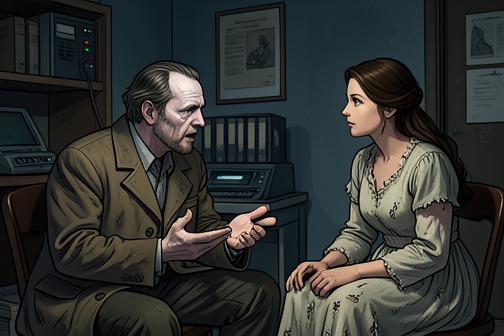
The [Underground Man](entity:character-recall-character-underground-man-62aab1afc7fd)’s lecture to Liza and invitation to visit is a turning point in their encounter: he describes the debt and social abandonment that threaten her, but the force of his appeal becomes inseparable from his desire to control the scene and her response. His words provoke genuine anguish; when he recognizes what he has done, he apologizes and gives her his address. Liza agrees to come, setting in motion a visit that will test the benevolence he has claimed.
## The Conditions He Describes
The lecture draws its urgency from the material trap the Underground Man says Liza faces. He asks whether she is in debt to the madam and presents that debt as bondage: a burden that will deepen rather than be discharged, leaving her with less freedom the longer she remains. The food and coffee provided at the brothel do not, in his account, signify comfort or care; they are part of the arrangement that keeps her owing money. He predicts that her youth will pass, visitors will begin to scorn her, and she will be expelled while still in debt. These details make his argument more concrete than a general appeal to virtue: he describes an economic relation in which Liza’s apparent provision becomes the means of her continuing dependence.
He extends the warning beyond the brothel. If driven out, he says, Liza might move from one house to another and eventually reach the Haymarket, where customers beat women and treat the violence as ordinary. He describes a further degradation in which an ill woman, still considered useful to the madam, might be left without care. His picture of a consumptive woman dying in a cellar gives the warning a specific, grim point of reference: Liza has already heard of a girl who died of consumption, and the Underground Man forces her to imagine herself in the same position. The scene makes death not an abstract certainty but a possible consequence of poverty, illness, and a system that values a woman only while she remains profitable.
The imagined death becomes the speech’s most harrowing passage. The Underground Man pictures Liza dying in a damp, dark cellar, denied even water without abuse, and being handled after death by strangers who want her removed. He contrasts this abandonment with the remembrance given to other dead people by their families: for Liza, he insists, no one would mourn, remember her, or preserve her name. His vision culminates in the image of her knocking at her coffin and pleading to return to a life that had been thrown away. The account is his prediction, not an independently established account of Liza’s future; its force lies in the extremity with which he makes a possible fate present to her.
That argument is at once a denunciation of her constraints and an exercise of power over her feelings. The Underground Man says he has heard the abuse he describes himself, and his claim to firsthand knowledge lends the speech authority; yet he also recognizes that he is turning Liza’s soul upside down and tearing at her heart. As her anguish becomes visible, he is drawn onward by the effect he is producing, even as he senses its cruelty. The lecture thus does not simply offer rescue from coercion: it stages another person’s suffering under his control, with Liza made the audience for a future he narrates on her behalf.
## Emotional Reversal and the Invitation
The Underground Man’s speech abruptly changes character when its imagined future ceases to be an instrument he can manage. He says he had been carried away by his own skill, but the sight of Liza face down on the pillow, clutching it as her body shook with suppressed sobs, brings him to panic. He had known he was speaking stiffly and “like a book,” yet believed that the very bookishness would help him reach her. Now the effect he had sought confronts him as actual despair. The reversal exposes the distance between his fluency about suffering and his readiness to bear responsibility for the person suffering before him.
He sits beside Liza and takes her hands. When he begins to apologize, she grips his hand so tightly that he stops, sensing that his attempted explanation is not what she needs. Instead, he gives her his address and asks her to come to him. Liza answers resolutely that she will come, her head still bowed. The invitation converts the encounter from a one-sided speech into a prospective relationship: she now has a concrete way to seek him out, and he has made himself answerable to the consequences of the intimacy he has urged upon her.
## The Letter and the Limits of His Appeal
Before the encounter closes, Liza brings the Underground Man a letter that offers a counter-image to the future he has described. It is an ornate, respectful love letter from a medical student, or someone of that sort, and she presents it with visible pride. She explains that she met him at a dance in a private house. The letter matters to her not as proof that her circumstances have changed, but as evidence that she, too, has been loved sincerely and addressed with respect. She has kept it as a precious possession and fetches it so the Underground Man will know this part of her life; its careful language gives her a claim to dignity that his speech, however compassionate it sounds, has nearly eclipsed.
Her gesture unsettles the roles established by the lecture. The Underground Man has spoken as the one who understands Liza’s danger and can name her future, but now she offers him a piece of evidence about herself that his narrative cannot absorb or replace. He presses her hand and leaves without answering the letter’s meaning. Walking home through heavy, melting snow, exhausted and bewildered, he senses what he calls the loathsome truth. The scene’s close therefore complicates the apparent success of his invitation: Liza has agreed to visit, but she has also shown that she is more than the victim in the story he constructed for her. The letter preserves an independent measure of her worth, while his departure leaves unresolved whether he can meet her as a person rather than as the audience for his own performance.
Event 5
Liza Visits the Underground Man and Leaves
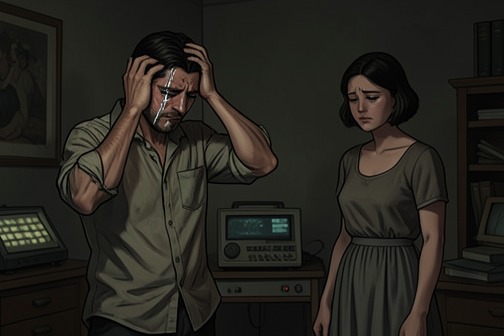
[Liza Visits the Underground Man and Leaves](entity:event-recall-event-9f99dbe4f036) is the decisive encounter in which the [Underground Man](entity:character-recall-character-underground-man-62aab1afc7fd)’s claim to rescue Liza collapses into a confession of manipulation. Her arrival finds him in the aftermath of a humiliating confrontation with Apollon; rather than sustain the role of her protector, he lashes out, admits that his earlier sermon was bound up with a desire for power, and exposes how readily shame becomes spite. Liza answers his cruelty with compassion, but even their moment of mutual grief turns, for him, toward mastery. He gives her money as an insult, discovers that she has returned it, and runs after her only to turn back. They never meet again.
## Arrival and Immediate Crisis
Liza enters while the Underground Man is still reacting to his encounter with Apollon. He has just seized Apollon by the shoulder and ordered him away, feeling on the verge of striking him. He does not notice the passage door opening until a figure comes in and stops to stare at them. Recognizing the witness, he rushes into his room in shame, clutching his hair and standing with his head against the wall. The interruption makes his private humiliation visible just as Liza arrives to see him.
Two minutes later Apollon announces that a woman is asking for him. He lets Liza in but stays to watch them with sardonic attention. The Underground Man’s first response is not welcome but a desperate order for Apollon to leave. This opening places Liza’s visit inside the very power struggle that has already unsettled him: he wants to control how he appears, yet another person has seen him at his least composed.
## The Confession Behind the Sermon
After Liza has been with him for some time, the Underground Man abruptly strikes the table with his fist and cries that he will kill Apollon. Liza starts at the outburst. He then turns on her with questions about why she has come, insisting that she answer. He tells her that she returned because his sentimental speech had made her long for fine sentiments again, and says that he had laughed at her then and is laughing at her now.
He explains the purpose his earlier appeal had concealed. At the farewell dinner, he had been insulted by the men who arrived before him; intending to thrash one of them, an officer, he failed to find him. He needed someone else on whom to avenge the insult, and Liza was there. The rescue rhetoric is thus recast as an instrument of retaliation: his attempt to influence her was entangled with his need to recover a sense of power after being humiliated himself.
He sharpens the admission by acknowledging that he had wanted power and sport, and had wanted to wring tears and humiliation from her. He says he could not sustain this performance, and recalls that he was frightened and gave her his address in a moment of folly. The address that made the present visit possible therefore belongs, in his own account, not to a settled offer of help but to an unstable mixture of domination, fear, and impulse.
## Liza’s Compassion and His Reversal
Liza listens with her lips parted and eyes wide, visibly shaken by the cynicism of what he says. The Underground Man expects an answer to his attack, but she does not respond in the way he anticipates. As he finishes, she recognizes how bitter it must have been for him to say these things. She feels herself far beneath him and cannot summon anger or resentment; instead, she rises, hesitantly reaches out, and then rushes to embrace him, bursting into tears. He, too, sobs as he has never sobbed before.
The embrace briefly interrupts the hostility between them. Yet the Underground Man describes a rapid change in his own feeling: ashamed to meet her eyes, he becomes conscious of a new sense of mastery and possession. He grips her hands tightly and says that hatred and attraction intensified one another, making his response almost an act of vengeance. Liza initially looks amazed and frightened, then embraces him warmly. Her compassionate gesture and his renewed desire for control occupy the same moment; the apparent reconciliation does not resolve the inequality that has shaped his treatment of her.
## The Note, the Pursuit, and the Ending
When Liza comes from behind the screen and moves toward the door, the Underground Man forces a spiteful grin and turns away from her gaze. She says goodbye. He runs up, opens her hand, places money in it, closes it, and hurries to the other corner of the room. He later rejects the excuse that he acted accidentally or without knowing what he was doing: he says that he put the money in her hand from spite. The note is not offered as simple assistance; in his account, the gesture is another attempt to wound her.
After Liza leaves, he sees the crumpled blue five-ruble note on the table beside the chair where she sat. She has thrown back the same note he put in her hand. The returned money overturns his assumption that she would accept his degrading gesture, and he recognizes that he had been too egotistical to imagine her refusal. He dresses in haste and runs into the street after her, but almost at once the pursuit gives way to retreat: he is already asking himself whether he will turn back halfway.
He never meets Liza again and hears nothing of her. Looking back on the episode, he remembers enduring profound suffering and remorse, yet he remains conscious of the likelihood that he would turn back even as he ran out. He also says that, for a long time, he remained pleased with the phrase about the benefit of resentment and hatred, despite nearly falling ill from misery. The ending preserves both sides of his response: the note and Liza’s refusal confront him with the harm he has done, but remorse does not dislodge his attachment to resentment.